Showing posts with label MOBILE PHONES. Show all posts

21 February 2016

NEW TECNOLOGIES USED TO CHEAT IN EXAMS

THE JAMES BOND-STYLE TECH USED TO CHEAT IN EXAMS

Last year Chinese authorities released pictures of James Bond-style technologies used by students during competitive exams. These included sophisticated vests that link up to a button-hole camera hidden in a pen or watch, used to beam out images of the exam paper to someone outside the hall with a receiver.
The person outside then looks up the answer to the question, and relays it back to a mobile phone hidden on the pupil in the exam hall. The speech is picked up via the mobile, and then sent on to a hidden earpiece.
Officials have launched a crackdown on those helping students to cheat during the 'gaokao'.
In the past criminal groups have been found to be selling stolen exam papers and launching cyber attacks on exam board websites.
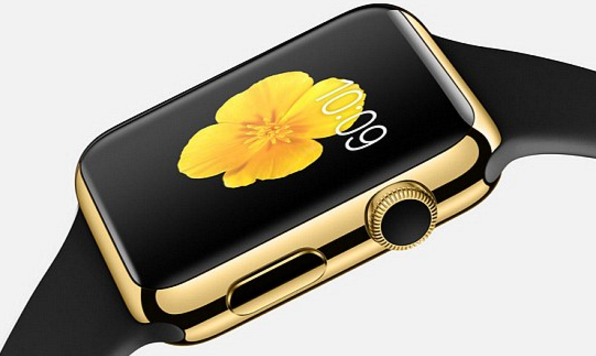
The fears come as the technology (Apple Watch shown) allows people to easily search online for the answer to a question, unbeknownst to the invigilator. Until recently, most types of smartwatches were allowed in exam halls. However, schools are now starting to treat them in the same way as mobile phones.

Smartwatches BANNED from exam halls: Universities start to prohibit technology to stop cheaters

Several universities are banning smartwatches in a bid to stop students cheating in exams, it has been reported.
Two universities in Australia are the latest to join the ever-growing list, with one telling students they must stow their watches in a clear bag under their chair.
This means that even students that might have used a regular watch to time themselves will no longer be able to at certain institutions.

The two Australian universities are the University of New South Wales and La Trobe University in Melbourne, Mashable reported. ‘Due to advances in watch technologies the UNSW exams rules have been updated,’ the UNSW posted on their website. ‘No wrist or handheld watches are to be worn or placed on your desk during exams. ‘Watches of any kind must be placed in a clear resalable bag under your exam chair before the exam begins.’

La Trobe University is slightly more lenient, allowing students to place regular watches on the desk in front of them. Smartwatches, though, are not permitted to be taken into the exam hall by the university.

The fears come as the technology allows people to easily search online for the answer to a question, unbeknownst to the invigilator. In the past, students may have preferred to write notes on their arms or palm, but now smartwatches provide a new avenue for cheating.

Until recently, most types of smartwatches were allowed in exam halls. However, schools are now starting to treat them in the same way as mobile phones, which are already prohibited. 

These are not the first institutions to ban the emerging technology from exam halls. Earlier this year, London City University was among one of several in the UK to ask students to hide their smartwatches from view - the same rules as for smartphones. And in more extreme measures to stop cheats, just a few weeks ago it was revealed that drones were being used to spy on pupils in China.

Officials in Luoyang, central China, have adopted the high-tech method to monitor students while they take the notoriously difficult tests. The silent-flying drones will hover over students during university entrance exams known as ‘gaokao’, which are taken by more than nine million teenagers every year. The devices will use 360 degree rotations to scan testing halls and locate suspicious radio signals created by hidden earpieces used to obtain the answers to exam questions. They can hover in the air for up to half an hour and monitor activity from heights of up to 1,640 feet (500 metres), according to Chinese news website People’s Daily Online.

Two universities in Australia have banned smartwatches from exams. One bans watches altogether, while the other allows them on desks.  The move comes as the technology allows students to cheat in exams. Others have gone further - such as using surveillance drones.


China monitors university entrance exams with drones to catch cheating students

Nearly 10 million Chinese students sat the annual make-or-break university entrance exams, known as the gaokao, or "high test", on Monday.

Authorities have become increasingly concerned about the risk of students using devices such as smart phones — some of which have become smaller and easier to hide — as an illicit aid during tests.

The exam is the only method used to gain entry to the nation's universities, which for poorer children can mean the difference between a white-collar office job and a life as a migrant labourer.

Officials in Luoyang purchased a drone designed to search for radio signals that could indicate cheating students. It would monitor signals from 500 metres above the test site, the paper said.

Photos on the website of the government-run China Daily showed radio engineering technicians using computers and scanning devices to search for signals that could be used to transmit answers to students.

A college student posing as someone else was caught at one test centre, and gave police the names of five other substitute test takers.

Meanwhile, Beijing deployed 17,000 police officers to redirect traffic and increase security at the testing sites, and also set up service stations to treat anxious parents should any suffer heart attacks, the city government said in a statement.

Security at test centres is extremely tight and in the past some schools have banned any metal from the exam room, leading to a prohibition on metal bra clasps.

In past years cheating devices have been found to be sewn into clothes.

Smartphones, social media helping students cheat in exams: University of Sydney report
August 2015
The internet and smartphones have made it easier for students to cheat in exams, a new report into academic misconduct at the University of Sydney has found.

The report followed investigations into ways to prevent and detect academic dishonesty and misconduct among students at the university.

The Academic Misconduct and Plagiarism Taskforce completed a number of investigations during May and June 2015, including interviews with representatives from each of the university's 16 faculties.

The report, An Approach to Minimising Academic Misconduct and Plagiarism at the University of Sydney, states, "The problem of cheating in exams is not trivial — a study on multiple choice exams within the university revealed an average level of cheating of about 5 per cent". 

The report found social media helps students share stolen exam papers and questions quickly, with several cases of this reported across the university. "Computer security breaches where exams can be stolen are also not uncommon, and any exam that is not changed constantly should be assumed to be in the public domain."

The authors of the report found exam supervision must be rigorous, devices should be confiscated and recommended a solution be found to prevent students using toilet breaks to search the internet for answers.

The report also looked at other forms of fraud and dishonesty, such as fraudulent medical certificates and other methods used to obtain special consideration.

"This can occur in relation to any assessment task, but a large area of concern for faculty is in relation to exams, particularly where students who have attended an exam subsequently claim illness and apply to re-sit the exam at a later date.

"Where the medical certificate has indeed been issued by a medical professional in good faith, there is little that can be done, even if the staff member suspects fraud. "There are also cases where such certificates are faked or even sold."

The report made a number of recommendations covering education, assessment, record keeping, coordination, support and policy changes. Among the recommendations was a suggestion to incorporate at least one tutorial or lecture session in the first year of every course for training in academic honesty matters.

8 March 2015

NOMOPHOBIA


NOMOPHOBIA


Curing Students of Nomophobia

Do you know this word? Nomophobia is a term describing a growing fear in today's world -- the fear of being without a mobile device, or beyond mobile phone contact. Among today's high school and college students, it's on the rise (va en aumento):

· An increasing number of college students now shower with their cell phone. 

· The average adolescent would rather lose a pinky-finger (meñique) than a cell phone. 

· A growing percentage text or tweet instead of actually talking to others. 

Nomophobia is everywhere in industrialized nations. The term is an abbreviation for "no-mobile-phone phobia," which was coined (acuñado) during a 2010 study by the UK Post Office. The study found that nearly (almost- casi) 53 percent of mobile phone users in Britain tend to be anxious when they "lose their mobile phone, run out of (agotar, quedarse sin) battery or credit, or have no network coverage (cobertura) ." 

The study found that about 58 percent of men and 47 percent of women suffer from the phobia, and an additional 9 percent feel stressed when their mobile phones are off. The study sampled (muestrear hacer la prueba con) 2,163 people. Fifty-five percent of those surveyed (enquestados) cited keeping in touch (mantener el contacto) with friends or family as the main reason that they got anxious when they could not use their mobile phones. The study compared stress levels induced by the average case of nomophobia to be on par (estar a la par) with those of "wedding day jitters"(nervios, nerviosismo) and trips to the dentists. 

In the U.S., it's gotten worse... 

· Sixty-five percent, or about two in three people, sleep with or next to their smart phones. (Among college students, it's even higher). 

· Thirty-four percent admitted to answering their cell phone during intimacy with their partner. (Hey, what happened to valuing the person you are with in-person?) 

· One in five people would rather go without shoes for a week than take a break from (descansar de) their phone. (It's a good way to lose your sole and your soul).

· More than half never switch off their phone. (I'd call that an addiction).

· A full 66 percent of all adults suffer from "nomophobia." 

It's time to take a break 

Whenever I find myself needing something in order to cope, I always check my lifestyle and my health. This may sound crazy, but my rule of thumb (regla general) is that I don't allow myself to be brought under the control of anything. Outside of food, water and shelter, I guard myself against subjection to any addiction that begins to dictate my behavior. This includes technology. I recognize that cell phones, tablets, computers and other technology introduced in the future will make my life easier and enable (me permite) me to work more efficiently. My principle, though, is this: Technology should be a servant, not a master. 

So what should we do to model a balanced approach for students? 

· Be sure there are daily times you turn off the cell phone and experience either face-to-face conversations or solitude. 

· Balance screen time and in-person time each week. For every hour you invest in front of a screen, you invest in human contact. 

· Try a technology fast every month, where you actually go for a day or more without a computer, tablet or phone. You'll feel liberated. 

· Place your phone at least 15 feet away from you when you sleep at night. I realize you'll have to get up to push "snooze,"(botón del despertador) but it's safer this way. 

· Block your day in time zones, where you spend time using technology, but also have blocks of time for organic, genuine interaction with people


27 December 2014

Why Are Public Cell Phone Users So Annoying?


You're sitting in a public lounge area, perhaps hoping to catch up on your reading, an assignment, or a document you need for work the next day. There's exactly one open seat left, so you grab it, only to realize that the person sitting next to you is having a loud, animated conversation on her cell phone. Thinking she must be ending the call soon, you find to your dismay that your seatmate has no such intention. Hard as you try, it's impossible not to tune her out. You learn that her sister-in-law has diabetes, her best friend's husband is cheating on his wife, and her mother is thinking of selling her home but can't get a high enough offer.

Now let's imagine that you were standing in line next to this woman while waiting to check out at the drug store. You might exchange a friendly glance, but it's highly unlikely that she'd spill these personal details to you. Never would you know that she's got all these family problems nor would you learn about her mother's financial predicament. She'd never share these personal secrets with a complete stranger unless that stranger happened to be within earshot of her "private" phone call.

Clearly, people feel that talking on the cell phone somehow isolates them from the people in their immediate vicinity. The deeper they get into their conversations, the more removed they feel from those who are physically present and the more engaged they become in the conversation itself. Unfortunately for them, and for their unwilling listeners, they are anything but isolated. Their public cell phone behavior is annoying, and perhaps a bit foolish (given that the wrong third party may overhear the conversation), but there’s no ill intent. You would most likely be right in concluding that the behavior is inconsiderate but it’s not motivated by any kind of ulterior motive.

In other situations, however, public cell phone talkers may enjoy being in the conversational limelight. They want to look busy, important, and in charge. Their public conversations are filled with overstated stories of their success, either real or implied. They let everyone around them know how well their sales are going or how many demands they experience in their high-level job. Perhaps their conversation is filled with boss-like commands in which they issue instructions to the person on the other end of the phone telling the other person to sell this or buy that. You might suspect that rather than being oblivious to their surroundings, these cell phone talkers relish sounding important, and are playing to what they believe is an impressionable audience.

Public cell phone use has all kinds of possible psychological meanings. For some it’s a reflection of a discrepancy between their attitudes and behavior. They know that it’s rude and annoying to engage in this behavior, but they rationalize it by believing that it’s necessary due to some special situation that is affecting them. In fact, it’s entirely plausible that people need to be on their cell phones and have no choice but to do so while they’re in a public place.

However, the habitual public cell phone talkers who seem to be egged on by an audience to sound important, busy, and successful may be acting more out of narcissism than out of lack of social awareness. They like having the attention, even if it’s negative, of those around them. Public cell phone behavior is a form of performance art.

Now that you know what might be behind public cell phone use, the question becomes why everyone finds it so annoying (even those who engage in it). Perhaps you’ve heard the research, now several years old, showing that people find cell phone conversations they overhear to be more distracting than in-person conversations between two or more people. Reported by Cornell University psychologist Lauren Emberson and colleagues (2010), this research suggests that we find public cell phone behavior to be annoying because it’s so intrusive into our consciousness. The reasoning goes something like this. When you hear a live conversation, you know what everyone is saying because it’s all there for you to hear. When you hear a cell phone conversation, you don’t know what the other person is saying, so your ever-curious braint ries to fill in the missing pieces. This takes more mental energy than simply hearing both sides of the conversation, leaving less for you to allocate to whatever else you might be doing such as that book you're reading or assignment you're trying to complete.

This provides part of the answer to the question of what’s so rude about public cell phone behavior, but clearly not all of it. A live conversation can also be distracting if it’s loud enough or if the conversation partners are talking about subject matter that interests you or, on the other hand, that you find stupid and meaningless. You may be sitting on the bus while two people behind you swap endless and trivial stories punctuated by loud bursts of laughter or exclamations. It’s pretty difficult to tune some overheard in-person conversations out, no matter how hard you try.

As this example illustrates, maybe loudness has something to do with what we find so annoying about overheard conversations. They’re hardnot to overhear but they also communicate a lack of respect by the speakers for the rights of the people around them to enjoy an interruption-free trip, commute, or wait.

Investigating just this possibility regarding public cell phone use, Michigan State sociologists Jonathan Forma and Stan Kaplowitz compared perceptions of rudeness by listeners exposed to cell phone and in-person conversations. Prior to examining perceived rudeness, however, they wondered whether cell phone users actually might talk at louder levels than do in-person communicators. You’ve probably experienced this situation yourself. Somehow you imagine that your cell phone lacks sufficient sensitivity to the human voice to transmit it accurately, so you speak into it at louder volume than you would if you were speaking in person.

Forma and Kaplowitz conducted a naturalistic study in which they measured the actual decibel levels (loudness) of conversations conducted in public places either face-to-face or over the phone. Controlling for gender, they found that, in fact, people on cell phones spoke 1.6 times as loud as did people chatting face-to-face. Not a large amount, but noticeable.

When it came to rating the rudeness of the two types of conversation, however, listeners exposed to cell phone conversations compared to two-person face-to-face conversations rated the overheard cell phone speakers as being ruder. Forma and Kaplowitz found, interestingly, that two-person overheard conversations in which only one partner could clearly be heard were rated as even ruder than cell phone conversations. It’s possible that in these situations, listeners felt the inaudible conversation partner should have spoken up, given that it’s annoying to be speaking to someone who never makes herself or himself heard (think of Seinfeld’s “quiet talker”).

Under normal circumstances, however, speaking in public on your cell phone will lead you to be seen as rude by the people around you. As long as you don’t mind offending those in your immediate vicinity, then, by all means go ahead and keep up your public cell phone use. Most of us would rather not be perceived as rude, though. Whatever your reasons for engaging in public cell phone use, whether it’s to feel more important or because you think you’ve got a good rationale, the study’s results have a clear implication.

Keep your cell phone use as private as possible. You may not have an alternative to calling someone on your cell phone while you’re in the presence of others. Modes of public transportation often are late, lines at checkout counters can get so long as to delay you from meeting someone, or perhaps you get a call that you absolutely must take then and there. In these cases, show that you care about the people around you by keeping your voice low, and your conversations short. Recognize that you have a listening audience, and rather than try to impress them with your importance, impress them with your courtesy. You can say to your conversation partner that you can only speak for a short time (this will be reassuring news to those sharing your public space), and then stick to that promise.

Cell phone conversations aren’t inherently rude, but all have the potential to become offensive. Keep yours short, quiet, and respectful of others, and you’ll help to contribute to a quieter and more polite cellular world.

How your mobile phone habits may be annoying your colleagues


Your colleagues probably do not want to overhear you talking on your cell phone about your cat’s digestive problems. Also, they generally don’t like to see your gaze slip to your iPhone while you are supposed to be having an in-person conversation. Eyes up here, everyone!

Americans may love their smartphones — but they aren’t necessarily so enamored with how their colleagues are using them in the workplace.

A new survey of 1,070 employed Americans, conducted by Harris Interactive on behalf of mobile business platform Jive Software, finds that almost everyone is annoyed by some type of bad phone etiquette at work. The top offender, cited by 65 percent of those surveyed: Having loud or private conversations in public areas. Even in open floor plan offices, experts say this is something that can be easily avoided. “Your mobile phone is mobile. Stand up, walk to somewhere that’s a little bit more private to have those private conversations,” said Sydney Sloan, Jive’s social media expert.

It’s not just your mobile phone conversations that are annoying your co-workers — it’s also all those beeps and buzzes your phone itself is making. About 59 percent of those surveyed said they were annoyed by co-workers who fail to silence or turn off their mobile phones when it’s appropriate.

If you are working in a cubicle farm, you should generally always have your phone on vibrate or silent mode, said Jodi R.R. Smith. She noted that even that may not be enough — sometimes the vibration your phone makes on your desk also can be grating to your co-workers.

If you absolutely have to have your phone ringer on, she recommends making sure that the ring tone itself is work appropriate.

Everyone who has a smartphone knows the allure of that little screen and its attendant alerts. That’s probably why 52 percent of those surveyed said another big annoyance is when people check their phones while having an in-person conversation.

Smith said it’s perfectly fine to check your phone periodically while you are chatting with a colleague about their weekend plans but also waiting for a big report to come through, or awaiting a call from your boss. But if you are meeting with an important client, she said the phone should be neither seen nor heard. “It should not make a noise. It shouldn’t even be buzzing. I should have it turned to airplane mode,” she said.

That doesn’t mean you have to completely ignore people who are trying to call or e-mail you. After all, that might annoy those colleagues and clients in an age when we expect everyone to always be connected.

Smith said one strategy is to schedule time between meetings to check your phone, so your office knows you will get any messages within about an hour. Another is to be aggressive about using voice mail messages and e-mail “out of office” replies to tell people where you will be during the day and when you will be checking your phone.

Interestingly, less than half of workers surveyed on behalf of Jive — 38 percent — were annoyed by people checking their phones during meetings.

You still may want to slip your phone in your pocket during that meeting. Sloan, of Jive, noted that productivity could improve considerably if everyone put down their devices and paid attention to the discussion for once. “Maybe, actually, the meeting would go quicker because everybody would be more focused,” she said.


27 January 2014

Candy Crush Saga: The Science Behind Our Addiction


A year after the game's mobile launch, we still can't stop playing. The app's designer and psychology experts weigh in on exactly what makes it so irresistible.

If you haven’t heard of Candy Crush, it’s the mobile game that’s so addictive, players say they have left their children stranded at school, abandoned housework and even injured themselves as they try to reach new levels of the game.

Candy Crush has been played 151 billion times since it launched as an app on mobile devices exactly year ago. And it’s the first game to ever be No. 1 on iOS, Android and Facebook at the same time. Candy Crush’s creator, King, a Stockholm-based company, says 1 in every 23 Facebook users plays it. And while Candy Crush is free, the in-game purchases that some players choose to make add up. Think Gaming, which releases gaming analytics, estimates that it takes in $875,382 per day. (By comparison, another insanely popular mobile game, Angry Birds, takes in an estimated $6,381 daily.)

All that adds up to some seriously distracted users. A survey by Ask Your Target Market polled 1,000 players and found that 32% of them ignored friends or family to play the game, 28% played during work, 10% got into arguments with significant others over how long they played, and 30% said they were “addicted.”

But there are lots of amusing games out there, so what’s so addictive about this one?

We asked Tommy Palm, one of the game’s designers, what the King team did to get us hooked. We also called a few psychology experts and players to understand the backstory on why their tactics worked so well. Here are the nine reasons they say Candy Crush is so irresistible:

1. It Makes You Wait

Perhaps the most genius element of Candy Crush is its ability to make you long for it. You get five chances (lives) to line up the requisite number of candy icons. Once you run out of lives, you have to wait in 30-minute increments to continue play. Or, if you’re impatient, you can pay to get back in the game — which is why it’s bringing in so much revenue. “You can’t just play all the time. You run out of lives,” says Andy Jarc, 22, one of the few players to reach level 440 in the game. “So the fact that they kind of constrain you — the whole mantra, ‘You always want what you can’t have.’ I can’t have more lives and I want them.”

“I think it makes the game more fun long term,” says designer Palm. “If you have a game that consumes a lot of mental bandwidth, you will continue playing it without noticing that you’re hungry or need to go to the bathroom. But then you binge and eventually you stop playing. It’s much better from an entertainment point of view to create a more balanced experience where you have natural breaks.”

2. We’re All Suckers for Sweet Talk

You flick four candies in a row, and they zap away. Candies above begin to cascade down, making even more matches. At the end words pop up on your screen, accompanied by a voice that says “Sweet” or “Delicious.” This feedback is essential for player immersion. “Positive rewards are the main reason people become addicted to things,” says Dr. Kimberly Young, a pioneering expert on Internet and gaming addiction who treats those addicted to the cyberworld. “When you play the game, you feel better about yourself.”

3. You Can Play With One Hand

According to Palm, the icons and setup were created so players could multitask. You can play Candy Crush while carrying a drink, toting a purse or bag, clinging to a subway pole, or hiding your phone under the table. That’s a huge advantage and makes this game perfect for a train ride, a distraction while you’re waiting to see a doctor, or something to get you through boring meetings. Plus, you can play offline as well — so even if you’re stuck in a tunnel, you can be “crushing.”

4. There’s Always More

According to Palm, the Candy Crush team updates the game constantly and creates new levels every two weeks. Right now there are 544 levels. “Just three years ago, a game with 30 levels would be astonishing,” King says. “And now with this game, it has raised the bar with how much content a mobile game should and will have.”

Plus, on any single level, there’s no way to fail. If you run out of options on a board — and that happens once in a blue moon — the board immediately resets. You never get stuck. You can’t lose. “I believe this is part of the reinforcing pattern which keeps you playing,” says Dr. Dinah Miller, a psychiatrist who has written about the addicting elements of another popular game, Angry Birds. The game only ends when you’ve run out of your allotted number of moves “and you can end that frustration by buying your way out.”

5. You Don’t Have to Pay – but if You Want to, It’s Easy

King reports that of all the players on its last level — 544 — more than 60% of them didn’t pay a cent to buy extra lives or chances to get there. But if you want to pay, it’s easy. Connected to Facebook or the app store? Just click to pay.

6. It Taps Into Our Inner Child

“Many people have had a very positive feeling about candy since they were kids,” says Palm. “And it makes for a really nice visual game board with a lot of color and interesting shapes.” In fact, when you play you feel as if you’re transported into an entire Candy Land experience. The game pieces are candy, and the homepage for the game looks like the traditional Candy Land board, with your Facebook friends’ pictures displayed as pieces on that board, sitting at whatever level they’re stuck on.

7. It’s Social

Social games — any game that allows you to connect with your friends through a social-media platform like Facebook — have taken off. Whether it’s Words With Friends, Kingdoms of Camelot or Candy Crush, the ability to play with, or compete against, friends is irresistible. “Look, nobody’s coming to me because they have a clinical addiction to Candy Crush,” says Young. “It’s more of a social addiction, if you will.”

8. It’s an Escape

“When you read the research about gaming,” Young says, “you’re often looking at people who are distracting themselves from something in their lives.” The relaxing exercise of lining up candies to the tune of upbeat music is a perfect stress reliever.

9. It Grows on You

This isn’t your average “line up three” game. “I started playing, and at first I was like whatever, it’s just bejeweled,” says Jarc. “But as I played more and more, it became addicting.”

King’s high-level of attentiveness toward updating gameplay has made it better quality than most casual games that are out there. When players took to Facebook to express their frustration with level 65 — notoriously one of the hardest levels in the game — King went into the game and altered the level to make it easier (though not too easy) multiple times.

The Negative Effects of Mobile Games

As hardware power increases, and prices decrease, the smartphone has quietly made quite a foothold as a platform in the video game industry. Many companies are using smartphones to target previously unreachable market segments in video gaming, such as casual gamers and women. As this platform becomes more popular, researchers are beginning to notice potential problems and dangerous behaviors associated with this type of video gaming that has never been observed with any other type of gaming.


Dangerous Distractions


The first negative effect of mobile gaming is the potential for distraction when performing another more important activity, such as driving. Video games should never be played while driving. Some mobile games use the internet and have the ability to push information and notifications to a player even when the player is not actively playing. The game may send these alerts while a player is driving, and the player may not identify the alert's origin as being from a game, or be tempted to check it anyways, creating a potentially dangerous situation.

Loss of Productivity Distractions

Many mobile games have a social aspect, or rely on other players taking turns or participating in the game. In games like this, it's common to have alerts and updates throughout the day about various things happening in different games. It's also very tempting to take several minutes and quickly check on a game, or make a quick move. These micro-transactions can quickly add up over the course of a day or week, resulting in many wasted hours of productivity.

Sleep Problems

Mobile phones and video games have both been independently linked to disruption in the sleep patterns of children in studies. Jan Van den Bulck, a senior lecturer in psychology at the Catholic University of Leuven in Belgium, found through surveys that one in five teenagers reported being awakened regularly by their mobile devices. Playing video games on mobile phones will no doubt continue to prevent children from getting the rest they need. Disruption in sleep patterns, like the ones caused by mobile games, have been linked to behavior issues, and sleepiness during the day.

Out of Control Spending

Many mobile games operate on a "free to premium" business model, where the basic game is free, but extras within the game cost money. Some players have found themselves spending large sums of money while playing games, in an out of control fashion. These types of games are potentially very dangerous to gamers with any type of addictive personalities. There have also been reports of parents allowing their children to use their devices to play their free games, and their children have somehow managed to purchase items accidentally, with no way for the parent to receive a refund.

The Advantages of Mobile Phone Games

Mobile-phone gaming has become a multi-billion dollar a year industry. Widespread ownership of cellphones ensures high market penetration for game developers, many of whom have departments dedicated solely to mobile gaming. In addition, the primary demographic for video games (youth and young adults) are among those most likely to own a cellphone. All in all, it is because of several specific advantages of mobile-phone games that the mobile gaming environment has become such a mammoth in the entertainment sector. 

Convenience

Part of mobile-phone gaming popularity is the ability to be taken anywhere. Once a game is downloaded onto a phone, it doesn't even need an Internet connection to run. The application runs through the phone's hard drive just like on a laptop computer. This means people can play mobile -hone games anywhere, at any time, even if they don't have Internet access or a phone signal. Best of all, most phone are small enough that games can be played in places where traditional games cannot, such as in a car or a waiting room. 


Cost

Most mobile-phone games range in price from just a few dollars to no more than $20. This makes them much cheaper than console games, which are usually $50 or more in 2011. The comparatively low cost allows mobile-phone gamers to save money or try out more games than their traditional gaming counterparts. The low prices also have the advantage of making mobile-phone games more accessible. Plus, people already have the platforms on which to play these games (their phones.) To play an Xbox, PS3 or computer game, users must first buy several hundred dollars worth of console equipment. 


Creativity

The low cost of mobile-phone games ties into another key advantage - the huge variation among mobile games. Since mobile games can be produced faster and cheaper than other video games, developers can take more of a risk in trying out new concepts or ideas. Developers don't stand to lose as much if an experimental game is unpopular. The result is remarkable creativity in mobile gaming. In addition, both large gaming corporations and tiny designer firms can compete in the same market. The low cost of production allows for further diversity in the gaming market, and further variation in mobile games as a whole. 

Community

Mobile phones were not originally meant to be a platform for gaming. They were meant as a means of connection and communication. These core values present themselves in mobile games as a distinct advantage. Many games have multiplayer features, online leader-boards or even chat functions where players can message other players with the same game. Instead of isolated gamers playing by themselves, the market has opened to reflect the direction of mainstream gaming -- toward groups of gamers playing together, even from remote locations.